The future of California student-athletes in CIF eligibility disputes, NCAA investigations, and NIL contract negotiations.
Experienced Attorneys For NCAA, NIL, and CIF Issues
Find the Help You Need



Facing a suspension, transfer issue, or hardship ruling? We fight for your student's right to play.
Practice Areas
CIF bylaws are dense, inconsistently applied, and often misunderstood — and the consequences for families are real. A single misapplied rule can cost a student a season, scholarship exposure, or postseason participation. We cut through the noise and handle the full lifecycle of CIF disputes, including:
Transfer Eligibility (Bylaw 207)
Athletically Motivated Allegations (Bylaw 510)
Academy / Club Affiliation Issues
Pre-Enrollment Contact & Recruiting Accusations
Hardship Waivers
Multi-Student / Program-Wide Investigations
Section Office and State CIF Appeals Panel Hearings
We prepare briefs, assemble declarations, guide families through the process, and argue appeals directly. Our goal is simple: restore student eligibility and protect athletic opportunity.
The college athletics landscape changes weekly. Whether transitioning from high school to college or navigating current eligibility requirements, we help families, athletes, and institutions stay aligned with complex NCAA/NAIA regulations, including:
Amateurism certification
Transfer portal guidance
Scholarship and roster rules
Academic eligibility requirements
Recruiting regulations and compliance audits
Institutional rules interpretations
We keep athletes eligible — and programs compliant.
NIL opportunities are expanding rapidly, and so are the risks. We provide strategic guidance for student-athletes, parents, and small businesses entering NIL sponsorships or marketing deals. Our services include:
Reviewing and negotiating NIL contracts
Ensuring compliance with CIF/NCAA/NAIA rules
Structuring brand partnerships
Protecting intellectual property and personal branding
Advising families on tax and reporting considerations
We help athletes maximize NIL rights without jeopardizing eligibility.
Representation for Coaches & Schools
Coaches and school administrators face increasing scrutiny around transfers, recruiting allegations, boundary issues, and parent complaints. We represent programs across California in:
Recruiting and “pre-enrollment contact” investigations
Player transfer disputes
Program-wide compliance reviews
Staff discipline matters
Administrative hearings
Drafting internal policies and communication protocols
We protect reputations, stabilize programs, and ensure compliance across every level of high-school athletics.
Sports-Related Litigation
When disputes escalate, we bring deep litigation experience to bear. Our practice covers:
Eligibility-related injunctions (TROs, preliminary injunctions)
Defamation and reputational harm
Contract disputes (coaches, trainers, NIL parties)
School district and Section Office conflicts
Safety and liability matters involving athletic programs
We litigate strategically to secure outcomes that protect both athletic careers and long-term opportunities.
Liability & Risk
Schools, club programs, and training centers face complex exposure. We help administrators and coaches assess and control risk by providing:
Policy and handbook drafting
Safety and supervision protocols
Facility and event liability assessments
Program audits for CIF/NCAA compliance
Insurance and waiver strategies
We keep programs protected so coaches and athletes can stay focused on performance.
Digital Media & Technology
Sports programs increasingly rely on digital tools — video platforms, recruiting databases, analytics trackers, wearable data — each carrying unique compliance obligations. We advise athletes, parents, and programs on:
Data privacy and athlete biometric data
Video, statistical, and recruiting platform compliance
Social media and branding risks
E-commerce and online merchandise for student-athletes
We ensure digital engagement doesn’t jeopardize eligibility or violate regulatory rules.
The Sports Law Practice of Wingert Law

Mark Amador is one of California’s top trial attorneys, having conducted over 100 trials in his prestigious career, including numerous high-profile cases. He joined Wingert Grebing Brubaker & Walshok following a distinguished career in public service as a prosecutor in the Office of the San Diego District Attorney. He focuses on guiding families through intricate appeal procedures and, when necessary, utilizes his aggressive trial approach to build strong cases and secure favorable outcomes.
Licenses:
State Bar of California
United States District Courts for the Southern and Central Districts of California
Education:
University of San Diego School of Law
University of California Los Angeles
Professional Memberships and Affiliations:
State Bar of California
San Diego County Bar Association
Lincoln Club of San Diego
San Diego La Raza Lawyers Association
UCLA Alumni Association
Enright Inn of Court
Mark Amador — Partner

BLOG POSTS

Supporting athletes, families, and coaches for 63 years
Headquartered in San Diego and serving clients statewide, California Sports Law represents individuals and schools in athletic-eligibility, transfer, and compliance matters.
Our practice focuses on high-school and collegiate sports law, including CIF appeals, NCAA waivers, and NIL-related legal issues.
Whether you’re a parent navigating a CIF hearing, a college athlete seeking reinstatement, or a coach facing disciplinary review, we bring precision and advocacy to every case.
Contact Us
1230 Columbia St, Suite 400 San Diego, CA 92101 | info@californiasportslaw.com | (619) 744-7023
FREQUENTLY ASKED QUESTIONS (FAQ):
CIF, NCAA & NIL Law in California
-
A CIF appeal is the process a student-athlete or family uses to challenge a CIF Section’s eligibility decision — usually involving a transfer, hardship, or disciplinary issue. Appeals must be submitted through the proper CIF forms and within strict timelines after the initial decision.
-
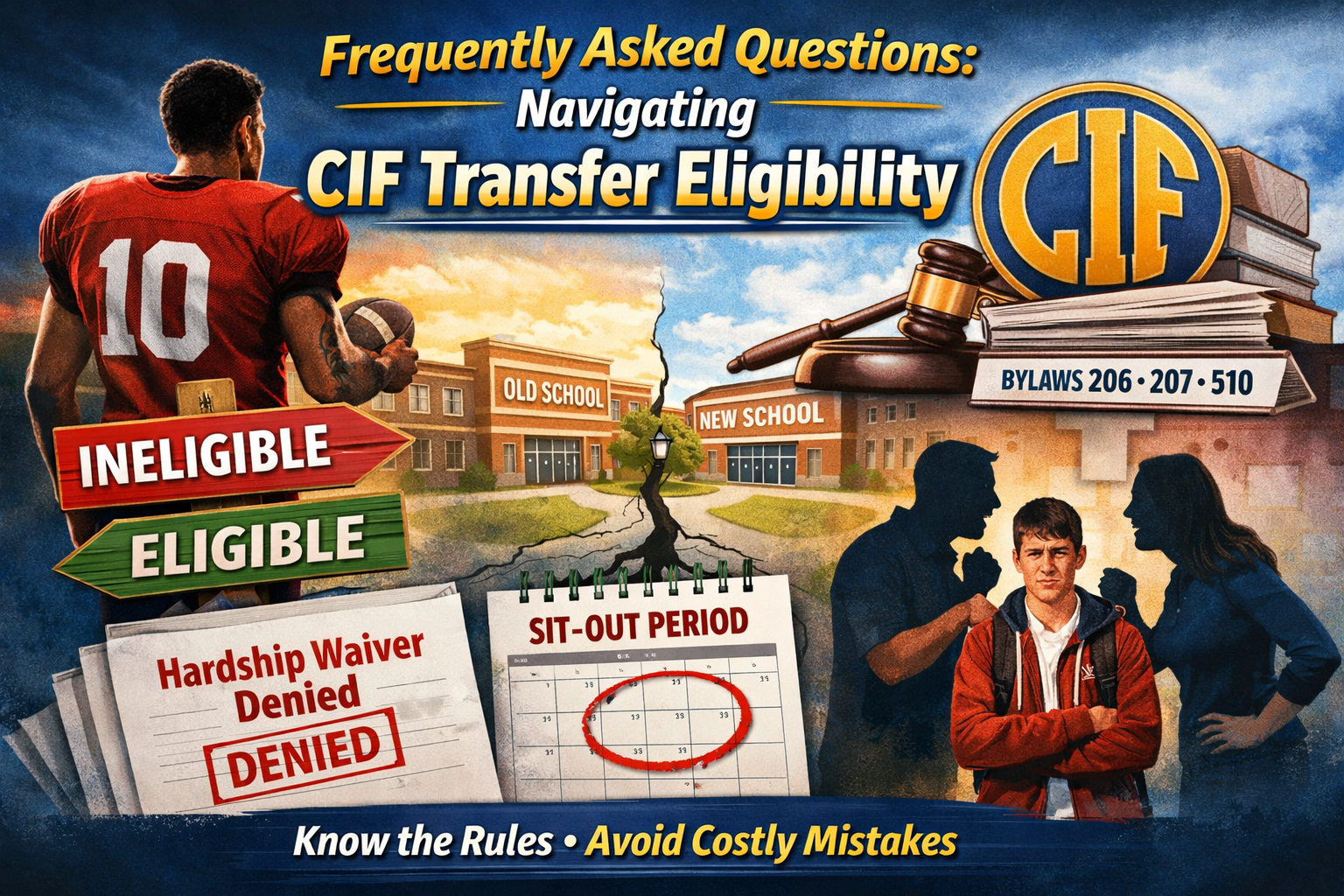
Bylaw 207 governs transfer eligibility for high school athletes in California. It sets the rules for when an athlete may compete after changing schools and outlines what counts as a valid change of residence or an athletically motivated transfer.
-
A Sit-Out Period (SOP) means a student-athlete can practice with their team but cannot compete in official contests for part of the season. CIF assigns sit-out periods when a transfer is not approved for immediate eligibility.
-
Sometimes. If the transfer meets CIF’s Valid Change of Residence (VCOR) standard and the family moved together for legitimate, non-athletic reasons, the athlete may be granted full eligibility without delay.
-
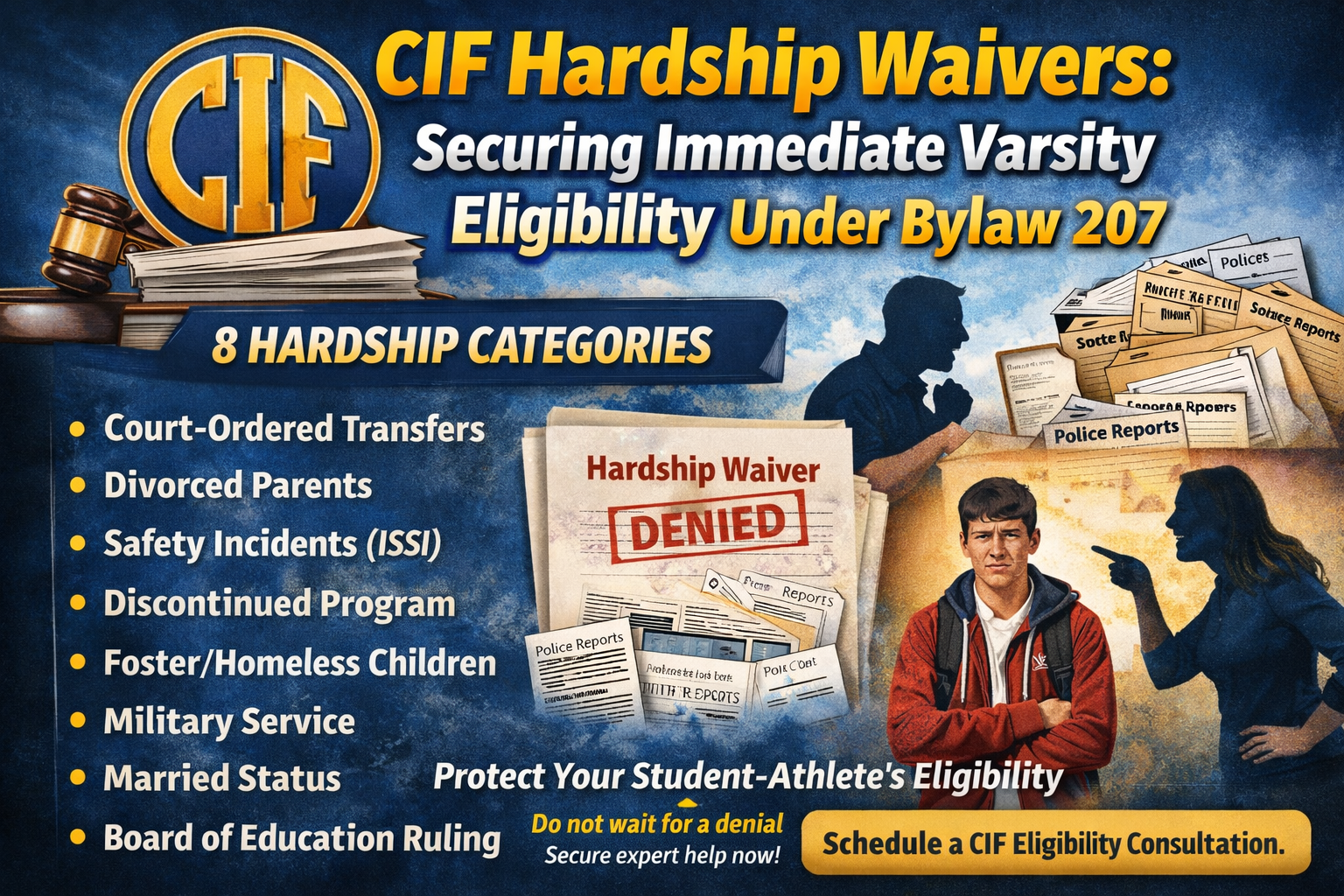
Hardship exceptions cover situations beyond the athlete’s control, such as medical issues, family illness, safety concerns, or documented personal crises. CIF requires strong evidence and documentation to grant a hardship waiver.
-
It’s not automatic. First, you must determine whether your case is eligible for appeal. Not every CIF decision can be challenged — for example, a finding that no hardship exists is generally not appealable, but a determination involving a violation of CIF Bylaw 510 (athletically motivated transfer) usually is.
Once you receive the Section Commissioner’s letter denying eligibility, the clock starts.
You have 15 calendar days to complete and submit the CIF State Transfer Appeal Form. Missing that deadline can permanently bar your appeal, so act quickly and gather supporting documentation right away.
-
Yes. While families can represent themselves, attorneys familiar with CIF bylaws can help draft the written appeal, prepare witnesses, and present evidence effectively before the Section or State panel. An attorney can also speak at the appeal hearing.
-
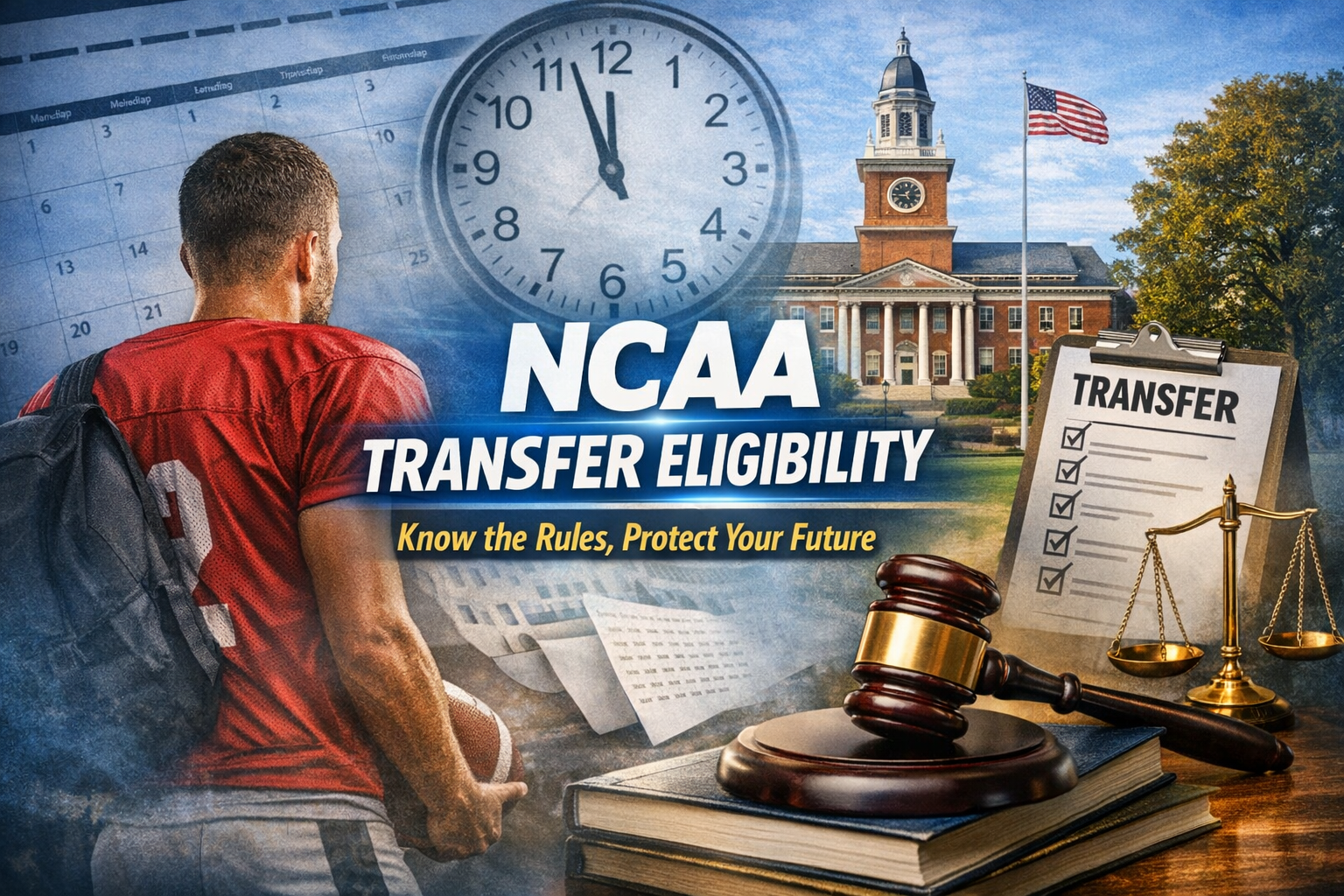
Our team also handles college eligibility and NIL compliance, including NCAA waivers, reinstatement requests, and name-image-likeness (NIL) contract reviews.
“Fair play is the most important rule of the game.”
– James Naismith
Get in Touch
Every eligibility issue is time-sensitive. Whether you’re preparing a CIF appeal, pursuing an NCAA waiver, or facing a coaching investigation, early legal guidance can make all the difference.
Let’s discuss your situation and take the next step toward resolving it.